
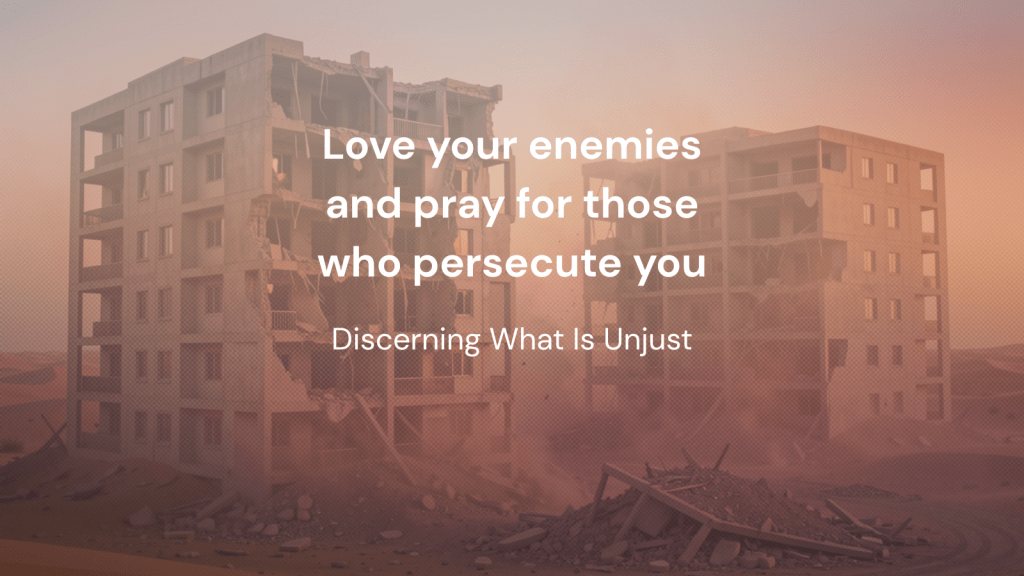
After a rocket attack, the return fire began. It always felt worse in our bodies than the incoming explosions. I don’t know how to explain that…. It just did.
The way the blasts echoed in our chests, a rhythmic thump, like our ribs were being used as drums. We knew what those rounds meant. They brought death, and that knowledge made the hollow thump inside us feel heavier.
“The Christian must treat his enemy as a brother.”
—from The Cost of Discipleship
The strange part was how quickly we continued normal life. During the explosions, we were playing video games, checking email. Imagine your daily routine, but with death echoing all around you.
As I walked out of the dayroom, I passed a young National Guardsman — though who am I kidding; I was young too.
I thought he had been playing solitaire.
He wasn’t.
He was just slamming cards into piles, muttering, “I hate this place… I hate this place…” Even in the moment of our so‑called victory, men were breaking.
Bonhoeffer understood this fracture.
“Silence in the face of evil is itself evil.”
—attributed to Bonhoeffer; paraphrased from his collected writings
The way violence hollows out the ones who survive it. He warned that the first danger of hate is not what it does to the enemy, but what it does to us. Enemy-love, for him, wasn’t a soft ideal. It was the only way to keep the human soul from collapsing under the weight of hatred and fear.
Bonhoeffer carried a vision of enemy‑love that should make many of us sick to our stomachs. Not because he was wrong, but because he understood God better than we do.
If you think I’m exaggerating, try saying this out loud: “God loved Adolf Hitler.” You can’t, can you?
“Love for the enemies is not a theoretical construction… it is the command of Jesus.”
—summary of Discipleship, ch. 14
But God does love His enemies — or else none of us would have hope.
Paul said Christ came to save sinners, “of whom I am chief,” and he wasn’t waxing poetic. He was a man who hunted Christians, who had used violence to erase the name of Jesus from human lips. If grace reached him, then grace reaches further than we want it to.
Bonhoeffer simply refused to look away from that truth.
The war with Iran gives us a contemporary mirror. A conflict marked by high civilian casualties, infrastructure strikes that unravel daily life, and the uneasy question of whether preemptive aggression can ever be called defense.
“The call to follow Christ always means a call to share the work of forgiving enemies.”
—summary of Life Together
It began with joint U.S.–Israeli strikes that killed Iran’s Supreme Leader and other officials, hitting nuclear sites and military assets. The stated goals were preventing nuclear weapons and regime change, but intelligence assessments showed no evidence of an imminent Iranian attack.
Strikes continued even as negotiations sputtered in Geneva and Oman. This is the world Bonhoeffer warned us about. A world where hate hollows us out first.
So far over 1,200 civilians are dead, including 175 girls (ages7-12) in a school. Some callus politicians have said publicly that their deaths were acceptable because they would grow up to wear burqas.
A U.S. strike on a desalination plant cut water to 30 villages. Oil depots near Tehran and Karaj burned beside neighborhoods.
Iran retaliated against U.S. bases and Gulf infrastructure, but notably spared desalination plants — a small act of restraint that feels like a fragile thread of humanity in a widening darkness.
This is not what they signed up for. I didn’t. We didn’t enlist to be sacrificed in foreign wars of aggression. We swore an oath to defend our country — not to be used as instruments in conflicts that have nothing to do with its defense.
Six U.S. troops have died.
Beneath all of this is a quieter question: when you say Iran can’t be allowed to have a nuclear weapon, is it because you long for a world with fewer nuclear weapons, or because you fear a culture you don’t understand?
Western news rarely tells you that Khamenei’s own religious rulings forbid nuclear weapons. You may say politicians violate their faith all the time — but that only reveals how little we understand, because Khamenei was a religious authority first, not a politician.
“The church has an unconditional obligation to the victims of any ordering of society.”
—summary of his 1933 essay The Church and the Jewish Question
It’s been said that the first casualty in any war is the truth. As Christians, that line should stop us cold. Jesus didn’t just speak truth — He named Himself as Truth. If we allow truth to die, where then is there room in our hearts for love? Bonhoeffer understood this. Though he resisted Hitler’s Germany as a German, he refused to surrender to hatred. I’m sure he stumbled at times — who wouldn’t? — but the whole shape of his life was one of a man transformed by the Spirit.
He loved. In a world most of us can barely fathom.
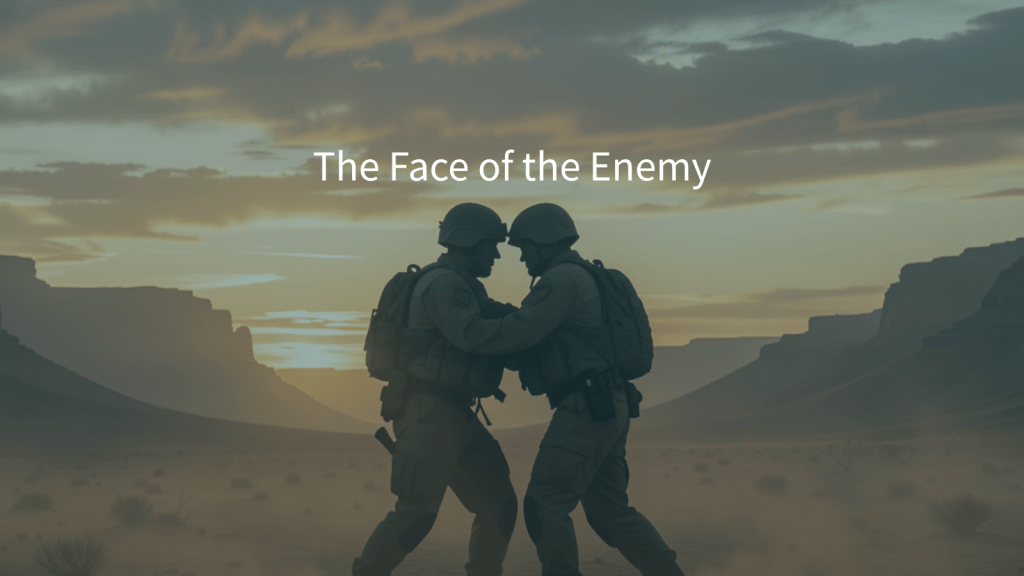
He wrote that the Christian must treat his enemy as a brother, even while resisting evil. That tension is the only thing that keeps us human. When we justify civilian deaths as strategic necessity, when we flatten entire cultures into threats, when we cheer destruction from a safe distance, we are not defending ourselves. Bonhoeffer saw this in Germany long before the world saw the camps. He knew that once a nation accepts hatred as normal, it begins to lose the ability to recognize its own face.
I’ve seen that deformation up close, in the hollow thump of return fire, in the young guardsman muttering “I hate this place” as if the words were the only thing holding him together.
War doesn’t just break bodies; it breaks souls.
Christians should not support this war. It fails the most basic tests of Scripture.
It does not confront grave injustice or defend the innocent
Gen. 14:14–16; Prov. 24:11
This conflict did not begin as a rescue of the oppressed. It began with preemptive strikes, political aims, and strategic calculations not the defense of the vulnerable.
Its aim is vengeance, not peace
Micah 6:8; Rom. 12:17–21
Retaliation is not righteousness. Scripture forbids repaying evil for evil, even when the state calls it “deterrence.”
All peaceful avenues were not exhausted
Matt. 18:15–17; Rom. 12:18
Negotiations were ongoing. Diplomacy was still on the table. Jesus’ command is clear: pursue peace as far as it depends on you.
It has already produced greater harm and appears futile
Luke 14:31–32
Jesus warns rulers to count the cost before going to war. The cost here is spiraling — civilian deaths, destabilized regions, and no clear path to peace.
The destruction outweighs any conceivable good
Ex. 21:23–25; Isa. 2:4
Scripture demands proportionality. This war has already crossed that line.
We still pray for our leaders and for our soldiers because Scripture commands us to intercede for those in authority and for those in danger.
But our prayers cannot stop at our own borders.
We pray for the Iranians.
We pray for the Muslims.
We pray for the one million Christians in Iran — believers whose churches trace their lineage back to the book of Acts.
We pray for every image-bearer caught in the gears of a conflict they did not choose.
We do not hate anyone.
We hate the evil that destroys lives.
And we speak — as Bonhoeffer did — for justice, for truth, and for the vulnerable.

Leave a comment