People who would normally defend civil liberties now tolerate suspicionless searches, checkpoints, and demands for identification—so long as these measures target the group they fear.
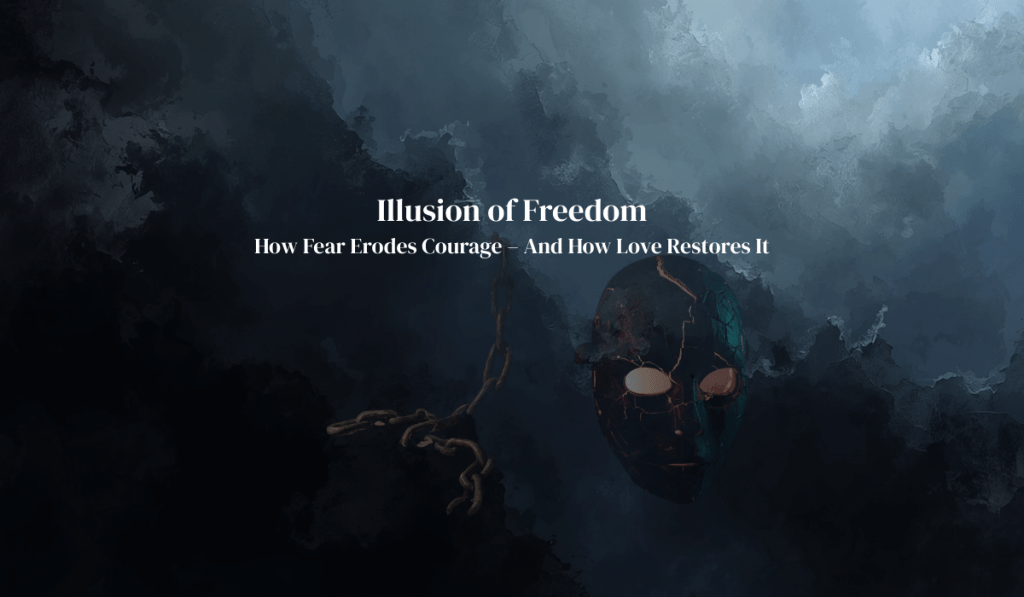
The church is called to be a community of courageous love. Yet too often we mirror the fears of our age. We baptize self-preservation as wisdom and call silence prudence. We confuse fear with discernment. In doing so, we become the ordinary people history will one day wonder about: the ones who went along, who stayed quiet, who let fear dictate their courage. Scripture commands otherwise: “Be strong and courageous. Do not be afraid; do not be discouraged, for the Lord your God will be with you wherever you go” (Joshua 1:9). Fear is not discernment. It is a surrender of the courage God requires.
Introduction — The Courage We Surrendered to Fear
I keep telling myself things will settle soon. They have to. Yet each morning the air feels heavier. Everyone insists danger is everywhere, woven into ordinary life. When someone questions it, the room stills and faces harden. So I nod along and measure every word. Caution masquerades as wisdom.
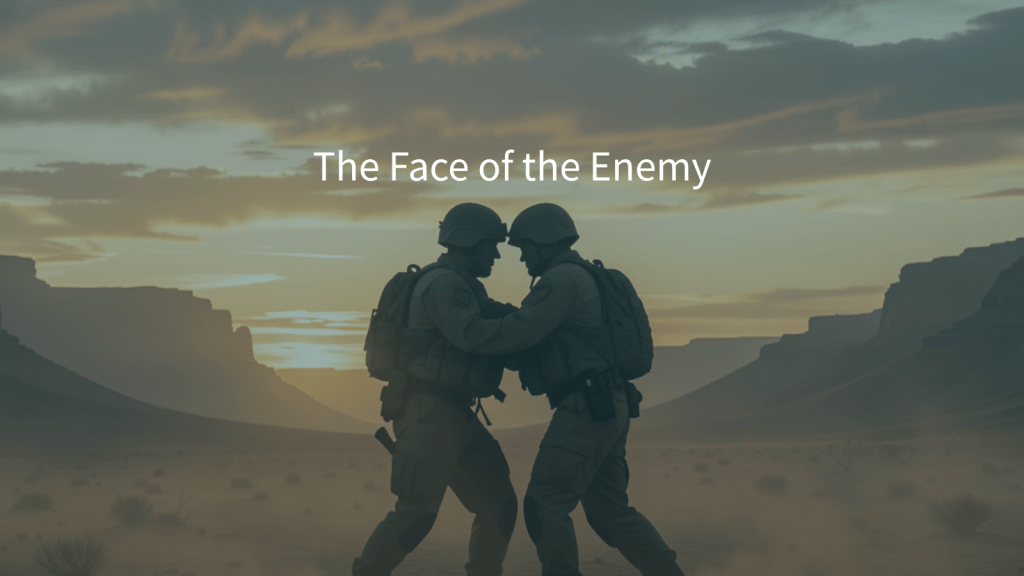
I used to think our way of life was unshakable. Now people whisper that everything we have built is fragile and that enemies wait for us to falter. Surely our culture is worth fighting for? Yet I cannot quite name the threat. It is more shadow than shape, more rumor than reality. The fear, however, is real enough. It moves through the streets, settles between neighbors, and teaches us to look over our shoulders before we speak.
This monologue is fictionalized but drawn from real pre-war German correspondence. It reminds us that fear-driven silence is not unique to any one people. Our own history bears similar scars: the Salem witch trials, the persecution of Native Americans, segregation and racial terror, the anti-communist purges, and shifting moral panics from Prohibition to the war on marijuana. Again and again, fear has made us turn inward, tighten the circle, and justify the unjustifiable.
A nation rarely abandons its freedoms all at once. The story is quieter, slower, more ordinary. It begins with fear. Fear has always been a powerful sculptor of human behavior.
In colonial Massachusetts, fear of witches turned neighbors into informants and courts into instruments of hysteria. Ordinary citizens stood by as accusations spiraled into executions. They were not monsters. They were frightened.
On the American frontier, fear of Native Americans justified forced removals, broken treaties, and massacres. Most settlers did not commit violence themselves. They simply accepted the narrative that “savages” threatened their safety.
In the Jim Crow South, fear of Black Americans fueled segregation, lynchings, and racial terror. The majority did not participate in violence. They simply stayed silent.
In the mid-20th century, fear of communism turned suspicion into virtue. Careers were destroyed and neighbors were blacklisted. Constitutional protections were ignored—not by tyrants alone, but by ordinary Americans who believed fear justified extraordinary measures.
The prophets condemned such silence: “Speak up for those who cannot speak for themselves” (Proverbs 31:8). Ordinary believers are not exempt.
Illusion vs. Tyranny
Tyranny is easy to recognize. It operates in the open with force, surveillance, and visible punishment. Under tyranny, courage becomes a public act: a protest, a refusal, a line in the sand. The moral landscape is stark.
The illusion of freedom is far more subtle and far more dangerous. It does not need secret police or barbed wire. It shapes desire rather than issuing commands. People police themselves long before any authority intervenes. Social pressure, fear of disapproval, and the pursuit of comfort do the work that violence once did.
This stands in contrast to the Spirit-given boldness Scripture promises: “For God gave us a spirit not of fear but of power and love and self-control” (2 Timothy 1:7). Under illusion, people surrender their agency because they believe they are choosing freely. Self-preservation feels noble, but the danger is more insidious: it lets us believe our silence is courage—that we are simply protecting ourselves and those we love. The ignoble thing is what happens next—when the illusion turns its force toward those outside the circle, and we remain quiet. When we call our silence prudence while others bear the cost of our caution.
Dissenters are not imprisoned. They are dismissed as rude, disruptive, or extreme until silence becomes a virtue.
Cultural Manifestations of the Illusion
The illusion thrives wherever a culture prizes politeness over truth, harmony over integrity, and comfort over conscience. These values sound virtuous but quietly reshape the moral imagination.
Politeness over truth appears when telling the truth becomes socially costly. In workplaces, classrooms, and online spaces, challenging an accepted narrative risks being labeled harmful or aggressive. Euphemisms replace clarity. People learn to speak indirectly and soften convictions to preserve emotional equilibrium.
Harmony over integrity emerges when belonging matters more than honesty. Groupthink flourishes in echo chambers and corporate cultures that demand alignment. Whistleblowers are ostracized because they disrupt unity. Dissent feels like betrayal.
Comfort over conscience takes root when a society becomes addicted to ease. Endless entertainment, consumerism, and therapeutic self-care promise relief from guilt or responsibility. Surveillance capitalism thrives not through coercion but through seduction, offering convenience in exchange for agency.
Jesus embodied grace and truth (John 1:14) yet spoke uncomfortable realities without apology. We are called to do the same: “Let your yes be yes, and your no, no” (Matthew 5:37). When fear replaces love, we abandon the bold witness Scripture demands: “There is no fear in love. But perfect love drives out fear” (1 John 4:18).
Nuance
Real tyranny still exists in places where dissent brings imprisonment or disappearance. Yet even there, illusions of national destiny or external enemies often justify the iron fist. In societies that consider themselves free, the danger is subtler. Illusions seep into habits and social norms. They teach people to censor themselves long before anyone else enforces it.
Silence becomes the bridge between illusion and tyranny. When people stop speaking uncomfortable truths and trade honesty for belonging, they create conditions in which coercion can grow. Illusions erode courage quietly and politely. By the time a society realizes what it has surrendered, the habits of fear are already rooted.
Conclusion
Freedom is never lost all at once. It erodes when people choose silence over truth, harmony over integrity, and comfort over conscience. The illusion of freedom thrives wherever fear teaches us to shrink, soften convictions, and avoid the discomfort courage requires.
After 9/11, fear led us to accept sweeping surveillance powers. During the pandemic, fear made restrictions feel necessary even when they raised serious questions about privacy. Fear of violent immigrants has led many to tolerate erosions of Fourth Amendment protections. None arrived with the fanfare of tyranny. They arrived quietly, wrapped in the language of safety.
The path forward begins with habits: honest dialogue that risks offense, friendships where difficult truths can be spoken, communities that prize integrity over approval, and a willingness to question the comforts that numb conscience. History gives us examples of those who refused to live by lies and chose conscience over compliance.
As Isaiah declares, “So do not fear, for I am with you; do not be dismayed, for I am your God. I will strengthen you and help you” (Isaiah 41:10). Reclaiming freedom—personal, cultural, and spiritual—demands that we reverse the drift. It requires choosing truth when inconvenient, integrity when costly, and conscience when lonely. A society formed by fear cannot remain free. A church shaped by fear cannot remain faithful. The work before us is to cultivate the courage that illusion quietly erodes.
Let us break the circle of fear and choose love instead. Love gives us the courage to stand beside the broken and the vulnerable long before the illusion can close in around us.

Leave a comment